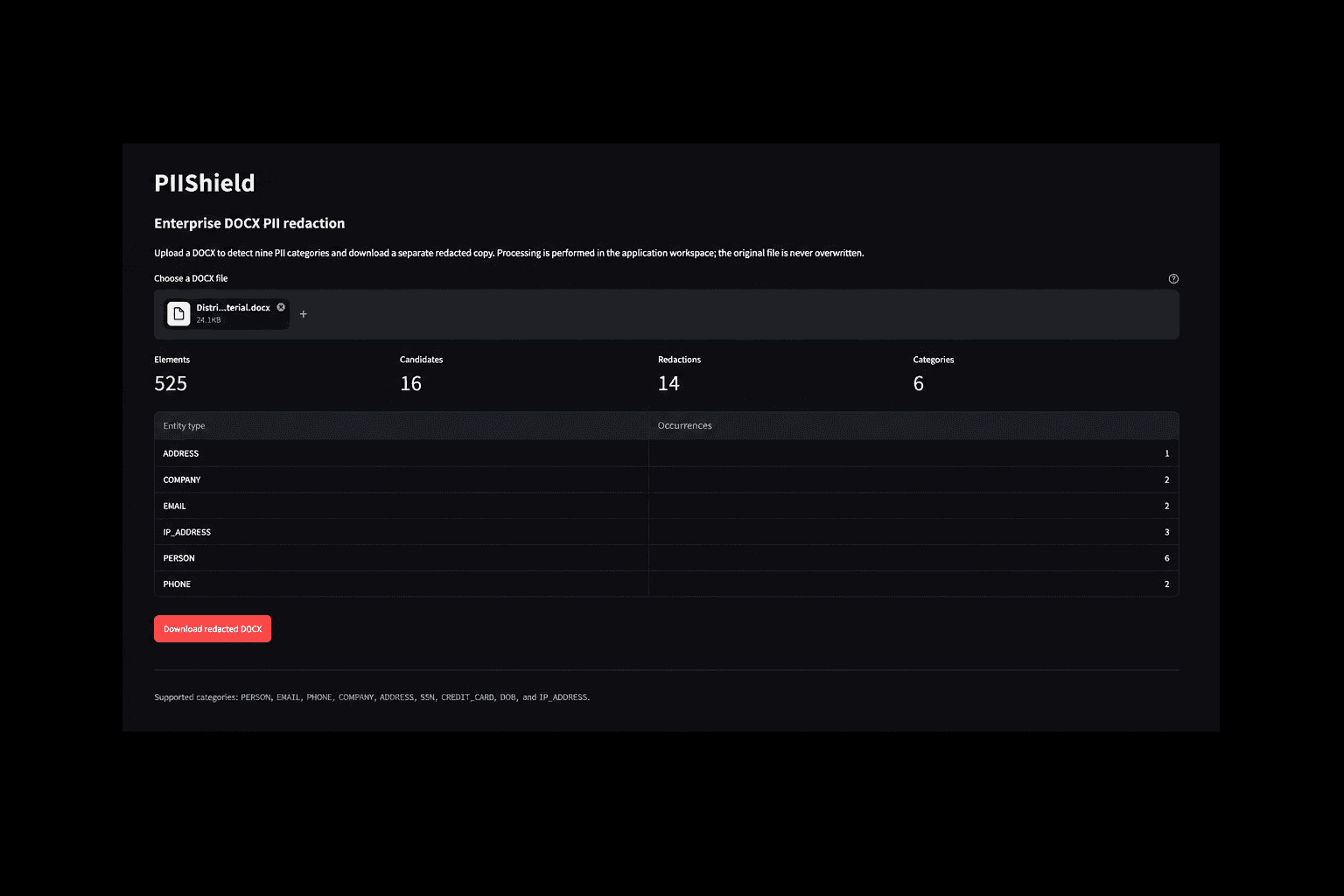
PIIShield- Enterprise PII Redaction Pipeline
An end-to-end privacy pipeline that detects, resolves, and deterministically redacts 9 categories of PII from DOCX documents while preserving document formatting and generating auditable evidence.
01Overview
PIIShield — Enterprise PII Redaction Pipeline
PIIShield is an end-to-end document privacy pipeline designed to identify and redact Personally Identifiable Information (PII) from DOCX documents.
The system accepts a DOCX document, extracts its content through structured Bronze and Silver processing layers, detects multiple categories of sensitive information, resolves overlapping detection candidates, replaces detected values with deterministic placeholders, reconstructs a separate redacted DOCX, and records evidence in Gold-layer outputs.
The system supports nine PII categories:
PERSON EMAIL PHONE COMPANY ADDRESS SSN CREDIT_CARD DOB IP_ADDRESS
The project also includes a Streamlit-based web interface and a Render deployment for demonstrating the complete pipeline.
02The Problem
The Problem
Business documents frequently contain sensitive information such as names, email addresses, phone numbers, addresses, identification numbers, dates of birth, and financial information.
Manually removing this information is:
Time-consuming Error-prone Difficult to reproduce Difficult to audit Vulnerable to formatting damage
A practical privacy solution therefore needs to do more than simply find sensitive strings.
It must reliably detect PII, handle overlapping matches, preserve the original document structure, produce consistent replacements, and provide evidence showing what was detected and redacted.
03The Solution
The Solution
PIIShield implements a reproducible document-processing pipeline.
The workflow is:
DOCX Upload → Bronze Extraction → Silver Normalization → PII Detection → Candidate Resolution → Deterministic Replacement → DOCX Reconstruction → Gold Evidence
The application accepts a DOCX file through the Streamlit interface and produces a separate redacted document that can be downloaded.
The system deliberately keeps the public deployment safe by excluding the original prospectus and raw source PII from the public repository.
04Architecture
Architecture
- Ingestion
The uploaded DOCX document is processed programmatically rather than manually.
The ingestion layer extracts relevant document content while retaining the information required for later reconstruction.
- Bronze Layer
The Bronze layer represents the extracted document content in a form suitable for downstream processing.
This provides a structured representation of the original document before normalization and detection.
- Silver Layer
The Silver layer prepares extracted content for reliable PII detection.
Normalization allows different representations of the same underlying content to be processed consistently.
- PII Detection
The unified detector searches for the nine required PII categories.
Detection combines structured pattern-based techniques with category-specific validation rather than treating every numeric or textual value as PII.
- Candidate Resolution
Multiple detectors can sometimes identify overlapping portions of the same text.
PIIShield resolves these candidates before replacement so that overlapping detections do not corrupt the resulting document.
- Deterministic Replacement
Detected PII values are replaced using deterministic placeholders.
This makes the redaction process reproducible and prevents the output from containing the original sensitive values.
- DOCX Reconstruction
A separate redacted DOCX is generated.
An important engineering goal was preserving document formatting instead of converting the document into plain text and rebuilding it from scratch.
- Gold Evidence
The pipeline records evidence about the detected PII.
This provides an auditable representation of the detection and redaction process while keeping the original source documents out of the public repository.
05Challenges
Challenges Overlapping PII Matches
Different detection rules can identify overlapping text.
For example, a piece of text may simultaneously satisfy multiple detector patterns.
The pipeline therefore needs an explicit candidate-resolution stage before performing replacements.
Preserving DOCX Formatting
Simple text extraction and replacement can easily destroy formatting, runs, paragraphs, or other document structure.
PIIShield therefore treats document reconstruction as a separate engineering problem rather than simply generating a new plain-text document.
Deterministic Redaction
Random replacements would make testing and evaluation difficult.
Deterministic replacement ensures that the same input produces predictable redaction behavior.
Deployment Constraints
The public deployment must demonstrate the system without exposing the original source documents or raw PII.
The repository therefore contains the deployable project surface while intentionally excluding sensitive source data.
Memory Usage
DOCX processing can become memory-intensive.
The implementation was optimized to reduce rendering memory usage while preserving DOCX formatting.
06Engineering Decisions
Engineering Decisions Layered Data Processing
The Bronze → Silver → Gold structure separates extraction, normalized processing, and evidence generation.
This makes the pipeline easier to debug, test, and extend.
Unified Detector
Instead of scattering PII detection logic throughout the application, detection is centralized into a unified detector.
This makes the supported PII categories explicit and simplifies testing.
Candidate Resolution Before Replacement
Replacement is intentionally performed only after detection candidates have been resolved.
This prevents overlapping matches from producing corrupted output.
Deterministic Replacements
Deterministic replacement makes results reproducible and simplifies regression testing.
Separate Redacted Output
The original document is never modified in-place.
The system generates a separate redacted DOCX, reducing the risk of accidentally destroying the original document.
Public-Safe Repository
The GitHub repository intentionally excludes raw source documents and sensitive extraction layers.
This allows the application and engineering work to be demonstrated publicly without publishing source PII.
Automated Testing
The project includes regression tests covering detector and pipeline behavior.
The complete local package contains 69 automated tests.
07Performance
Performance and Validation
The project was validated using automated tests and a labeled regression evaluation.
The complete local package currently reports:
69 automated tests passing
The evaluation layer includes labeled ground truth and metrics documentation.
The application was also deployed through Render, with the live application shell returning an HTTP 200 health response during verification.
The project focuses on both detection accuracy and practical document-processing reliability rather than treating PII detection as an isolated pattern-matching task.
08Lessons Learned
Lessons Learned PII Detection Is More Than Regex
Detecting PII requires category-specific rules, normalization, validation, and conflict resolution.
A detector that simply searches for patterns can generate false positives and overlapping matches.
Document Preservation Matters
A privacy system is not useful if the redaction process destroys the structure and formatting of the business document.
The output document must remain usable.
Reproducibility Is Important
Deterministic processing makes the system easier to test, debug, evaluate, and trust.
Security Must Be Considered During Deployment
A privacy-focused application should not accidentally expose the very data it is designed to protect.
Separating deployable application code from source PII is therefore an important part of the architecture.
Evaluation Should Be Built Into the Pipeline
Maintaining labeled evaluation data and regression tests makes it possible to measure changes to the detector instead of relying only on manual inspection.
09Future Work
Future Work
Potential improvements include:
Adding more PII categories Improving contextual detection to reduce false positives Supporting additional document formats such as PDF and XLSX Adding configurable redaction policies Adding confidence scores for detections Introducing stronger entity-level NLP models Supporting batch document processing Adding role-based access control Adding encrypted temporary storage Expanding evaluation datasets Adding detailed monitoring and production observability Providing an API alongside the Streamlit interface Project Impact
PIIShield demonstrates how a privacy-oriented data pipeline can combine document processing, PII detection, deterministic transformation, automated testing, security considerations, and cloud deployment into a single reproducible system.
Rather than building only a PII detector, the project addresses the complete workflow from document ingestion to a usable redacted document and auditable detection evidence.
Core pipeline:
DOCX → Extract → Normalize → Detect → Resolve → Redact → Reconstruct → Audit
Related Projects
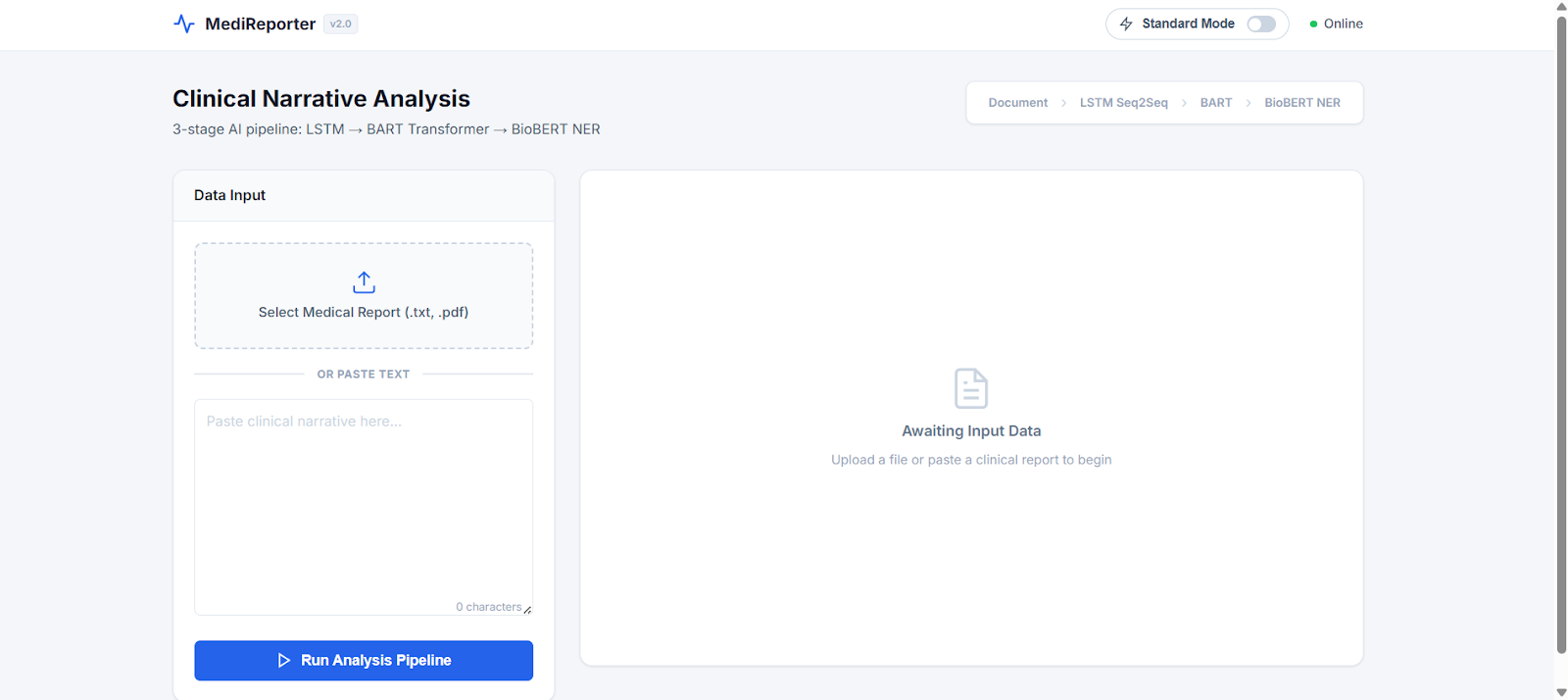
MediReporter
AI-powered clinical documentation system that converts medical reports into structured clinical summaries using NLP and transformer models.
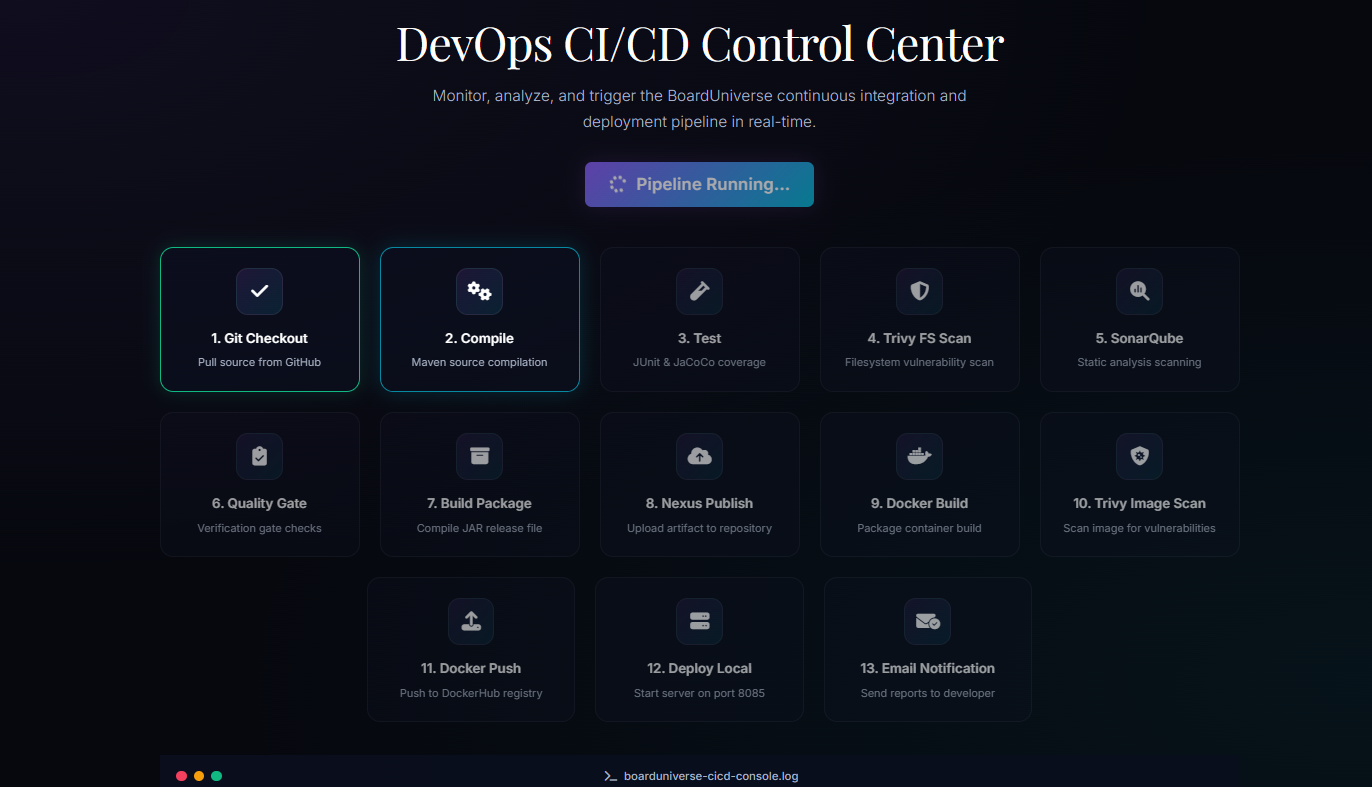
BoardUniverse
Enterprise-grade CI/CD automation platform with Docker, Jenkins, SonarQube, Nexus, and Trivy for secure, production-ready deployments.
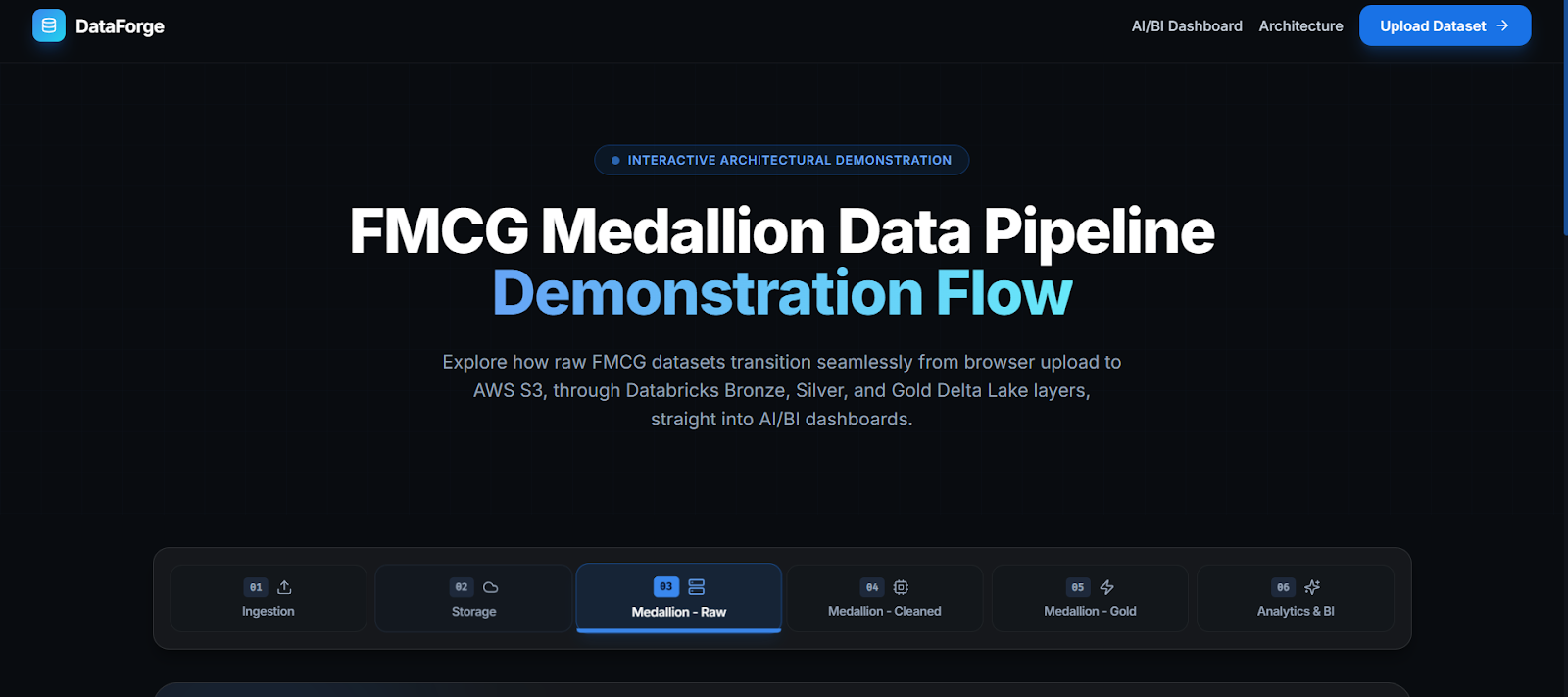
DataForge
Enterprise data lakehouse platform implementing Medallion Architecture on AWS + Databricks with real-time AI/BI dashboards.